GYNECOLOGY
Obstetric Ultrasound in Daugavpils
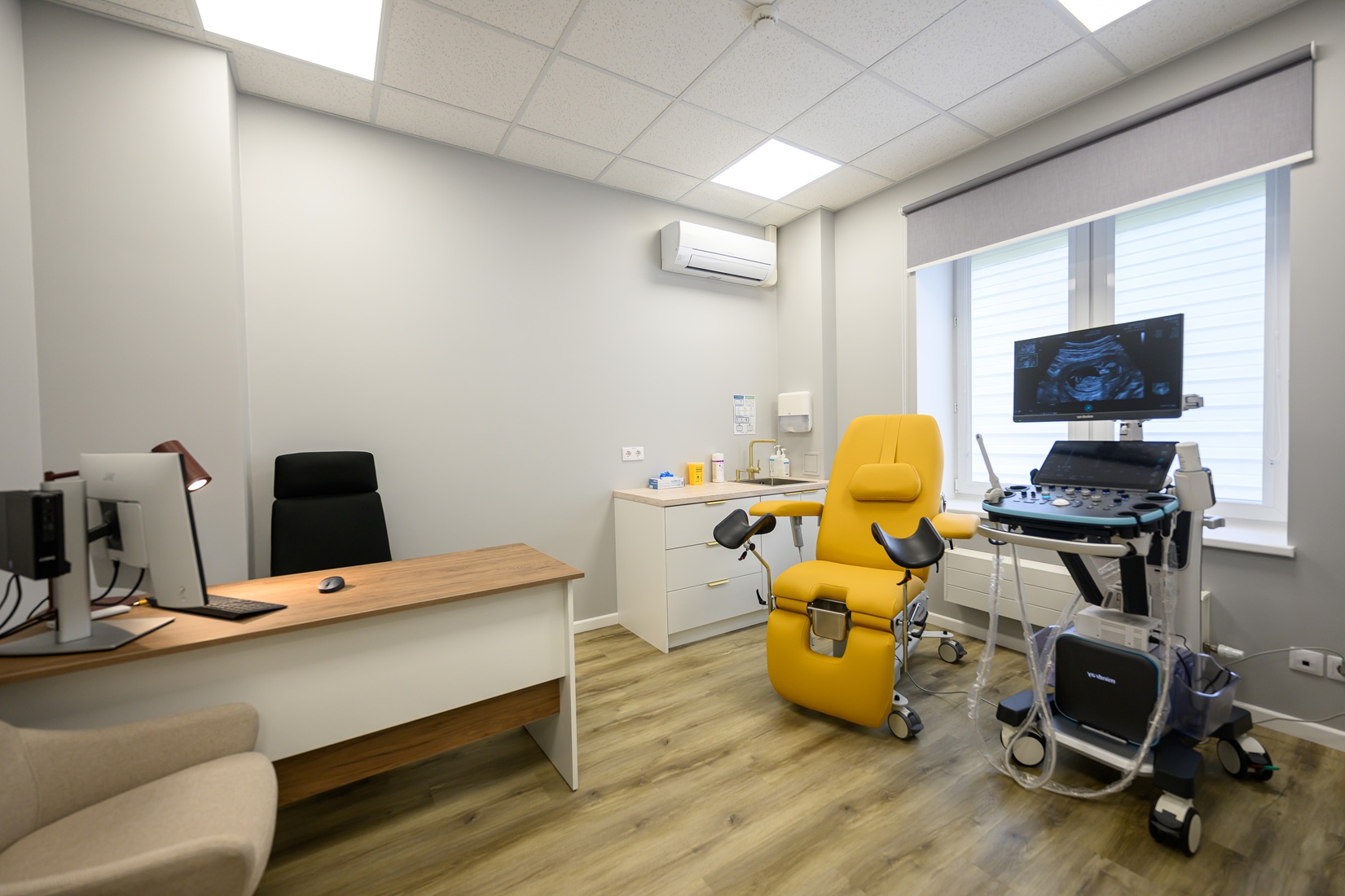
Obstetric ultrasound is an examination to assess pregnancy progression and fetal development. At Urogin Clinic in Daugavpils, ultrasound is performed at various stages of pregnancy, including early pregnancy assessment, first and second trimester ultrasound screening, and third trimester ultrasound.
During ultrasound, according to gestational age, it is possible to assess the location and development of the pregnancy, fetal heart activity, growth and anatomy, placental position, amniotic fluid volume, and other parameters characterizing pregnancy progression.
In early pregnancy, the examination can be performed transvaginally (by inserting the ultrasound probe into the vagina) or transabdominally (by performing the examination through the anterior abdominal wall), depending on the situation. In later pregnancy, ultrasound is usually performed transabdominally.

Individual approach
The pregnant woman's health status and complaints are evaluated individually.

Experienced Specialist
Extensive experience in obstetric care

Confidentiality
The ultrasound examination is conducted with privacy and confidentiality.

Ultrasound at various stages of pregnancy
Early pregnancy ultrasound — up to first trimester screening
For assessing pregnancy location, embryo count, gestational age, embryonic heart activity, and early pregnancy development.
First trimester ultrasound screening — 11th–13th week of pregnancy
For clarifying gestational age, assessing fetal growth, early anatomy and development, and evaluating first trimester ultrasound markers.
Second trimester ultrasound screening — 20th–22nd week of pregnancy
For detailed assessment of fetal anatomy, size, growth and development, as well as placental position and amniotic fluid volume.
Third trimester ultrasound — 32nd–34th week of pregnancy
For assessing fetal growth, position, placenta, amniotic fluid volume, and other parameters of pregnancy progression. Ultrasound in case of complaints or changes — at any gestational age For evaluating bleeding, pain, changes in fetal movements, or other pregnancy-related complaints and clinical changes.
What can be assessed with ultrasound?

Pregnancy location and development
In early pregnancy, it is possible to assess whether the pregnancy is located in the uterine cavity, determine the number of embryos, and evaluate pregnancy development according to gestational age.

Embryonic or fetal heart activity
Embryonic or fetal heart activity and other parameters characterizing pregnancy development are evaluated according to gestational age.

Fetal anatomy
During first and second trimester ultrasound screening, fetal anatomical structures and their development are evaluated according to gestational age.

Fetal size and growth
Fetal measurements appropriate for gestational age are taken to assess growth and its conformity to gestational age.

Placenta, amniotic fluid, and fetal position
Placental localization, amniotic fluid volume, fetal position, and other parameters of pregnancy progression are evaluated according to gestational age.

Obstetric ultrasound

UroGin Clinic, Raiņa 26b, Daugavpils, LV-5401, Latvia

How is the examination performed?

Consultation and evaluation of pregnancy history
During the consultation, the doctor clarifies the patient's complaints, menstrual cycle length and regularity, previous illnesses, and the reason for the examination.

Performing the ultrasound examination
The doctor selects the most suitable type of ultrasound for the gestational age and examination purpose, and performs the necessary measurements and evaluation of fetal structures.

Evaluation of pregnancy and fetal development
Fetal heart activity, anatomy, size, growth, and other parameters characterizing pregnancy progression are evaluated according to gestational age.

Explanation of results to the pregnant woman during consultation
After the examination, the doctor explains the ultrasound results and, if necessary, recommends further observation, additional examinations, or consultation.

How to prepare for a consultation?
Preparation depends on the gestational age and the planned type of examination.
In early pregnancy, if transvaginal ultrasound is planned, special preparation is usually not required, and the examination is performed with an empty bladder.
If transabdominal ultrasound is planned in early pregnancy, a full bladder may be necessary to improve visualization of the uterus and pregnancy.
In later pregnancy, special preparation is usually not required.
It is recommended to bring pregnancy care documents, the mother’s passport, and results of previous ultrasound, laboratory, or other examinations, if available, to the examination.
Ultrasound examinations are performed by Dr. Alla Aleksandrova
Dr. Alla Aleksandrova performs ultrasound examinations at various stages of pregnancy, evaluating fetal development according to gestational age, fetal growth, the condition of the placenta and amniotic fluid, and the overall progression of the pregnancy.
During the examination, the doctor takes into account the patient’s health status, complaints, and results of previous examinations. Extensive experience in gynecology, obstetric care, and ultrasound allows for a comprehensive evaluation of the obtained results, providing a clear explanation, and, if necessary, recommending further observation or additional examinations.
Main areas of activity:
- Gynecologist consultations
- Diagnosis and Treatment of Gynecological Diseases
- Female Reproductive Health
- Gynecological ultrasonography
- Pregnancy Consultations
- Obstetric ultrasonography
- Gynecological procedures
- Pregnancy Planning
- Initial evaluation of difficulties with conception
- Diagnosis and Treatment of Urinary Incontinence in Women
- Evaluation of Indications for Surgical Treatment
- Experience in Laparoscopic Gynecological Surgery
Frequently Asked Questions
When is obstetric ultrasound recommended for the first time?
Ultrasound can be performed in early pregnancy to confirm the location of the pregnancy, clarify its duration, and assess its development. The optimal time for the first ultrasound depends on the specific situation and the patient’s complaints.
When can embryonic heart activity be detected by ultrasound?
Embryonic heart activity can be detected in early pregnancy, but the exact timing depends on the actual gestational age and the type of examination. If heart activity is not yet visible in very early pregnancy, a repeat ultrasound may be necessary.
When is first trimester ultrasound screening performed?
First trimester ultrasound screening is performed between the 11th and 13th weeks of pregnancy. During the examination, gestational age is clarified, and fetal growth, early anatomy, development, and ultrasound markers are evaluated.
When is second trimester ultrasound screening performed?
Second trimester ultrasound screening is performed between the 20th and 22nd weeks of pregnancy. The main goal of the examination is a detailed assessment of fetal anatomy, growth, and development.
When is third trimester ultrasound performed?
Third trimester ultrasound is usually performed between the 32nd and 34th weeks of pregnancy to assess fetal growth and position, the placenta, amniotic fluid volume, and other parameters of pregnancy progression.
Is it possible to determine the fetal sex by ultrasound?
Yes. At the appropriate gestational age and if the fetal position allows for sufficient visualization of the genitals, it is possible to determine the fetal sex by ultrasound. However, it cannot be reliably determined in every examination.
Is it permissible to perform ultrasound multiple times during pregnancy?
Yes. Ultrasound can be performed repeatedly during pregnancy according to the pregnancy monitoring plan and medical indications.
Is it possible to perform obstetric ultrasound without a separate gynecologist's consultation?
Yes. Obstetric ultrasound can be booked as a separate examination. If changes are detected during the examination, the doctor explains the necessary further course of action and, if necessary, recommends additional examinations or consultation.