Urology
Urological procedures in Daugavpils
At Urogin Clinic in Daugavpils, outpatient urological diagnostic and therapeutic procedures are performed for the diagnosis, treatment, and ongoing care of urinary tract, bladder, prostate, and other urological diseases. Available services include endoscopic procedures, transrectal ultrasound of the prostate, ultrasound-guided prostate biopsy, care of urinary catheters and drains, and other urological procedures.
Procedures are performed based on the doctor’s assessment and according to medical indications. Depending on the specific situation, they may be performed during a consultation or scheduled for a separate visit. Before the procedure, the doctor explains its course, necessary preparation, and subsequent recommendations.

Individual approach
Each patient's health condition and complaints are assessed individually.

Experienced Specialist
Extensive experience in urological procedures, including 10+ years of experience in urological surgery.

Confidentiality
The procedure is conducted with respect for patient privacy and confidentiality.

Available urological procedures
Flexible cystoscopy
Endoscopic examination of the bladder and urethra with a flexible cystoscope. Learn about the procedure, how to prepare, and how to apply.
More about cystoscopy
Transrectal ultrasound of the prostate
Assessment of prostate size, volume, and anatomical structure for diagnosis, monitoring, and planning treatment tactics.
Ultrasound-guided transrectal prostate biopsy
Collection of prostate tissue samples under ultrasound guidance for histological examination and diagnosis of prostate malignancy in cases of suspicion.
Nephrostomy care
Care, dressing, and replacement of a nephrostomy catheter in the established channel to ensure stable and continuous urine outflow and maintain full drainage function long-term.
Bladder and cystostomy catheter care
Bladder catheterization, insertion, replacement, or removal of an indwelling catheter, as well as changing a cystostomy catheter.
Urethral dilation
Gradual widening of the urethra in certain cases of urethral stricture to improve urine outflow and effectively reduce urination disorders long-term.
Other urological procedures, including ultrasound-guided procedures, are performed according to medical indications and after prior agreement with the doctor.
When are urological procedures performed?

To ensure urine outflow
In cases of acute or chronic urinary retention and other urinary outflow disorders requiring urinary tract drainage.

For catheter and drain care
For the care, replacement, removal, or troubleshooting of nephrostomy, cystostomy, or bladder catheters.

In cases of urethral stricture
In cases of urethral stricture, to improve urine outflow and reduce urination disorders associated with the stricture.

For diagnosis
For the assessment of changes in the urethra, bladder, or prostate, by performing fibrourethrocystoscopy, transrectal ultrasound, or ultrasound-guided biopsy.

Urological procedures

UroGin Clinic, Raiņa 26b, Daugavpils, LV-5401, Latvia

How is the procedure performed?

1. Doctor's assessment
Before the procedure, the doctor assesses the indications, the patient's health condition, and previous examinations.

2. Preparation
The patient is informed about the course of the procedure, necessary preparation, and potential risks.

3. Performing the procedure
The procedure is performed on an outpatient basis and according to the patient's specific clinical situation and treatment strategy.

4. Recommendations
After the procedure, the doctor provides recommendations for further care, monitoring, and necessary follow-up.
How to prepare for the procedure?
Preparation may vary depending on the planned procedure. It is recommended to bring the following to the appointment:
- results of previous analyses and examinations;
- hospital discharge summaries and previous doctors' conclusions;
- information about regularly used medications;
- information on the use of blood-thinning medications;
- information on recent urinary tract infections and antibiotics used;
- information on drug and antibiotic allergies.
Before certain procedures, a urine analysis or urine culture, as well as prophylactic antibiotic use, may be necessary. The patient will be informed about the necessary preparation and changes in medication use before the procedure.
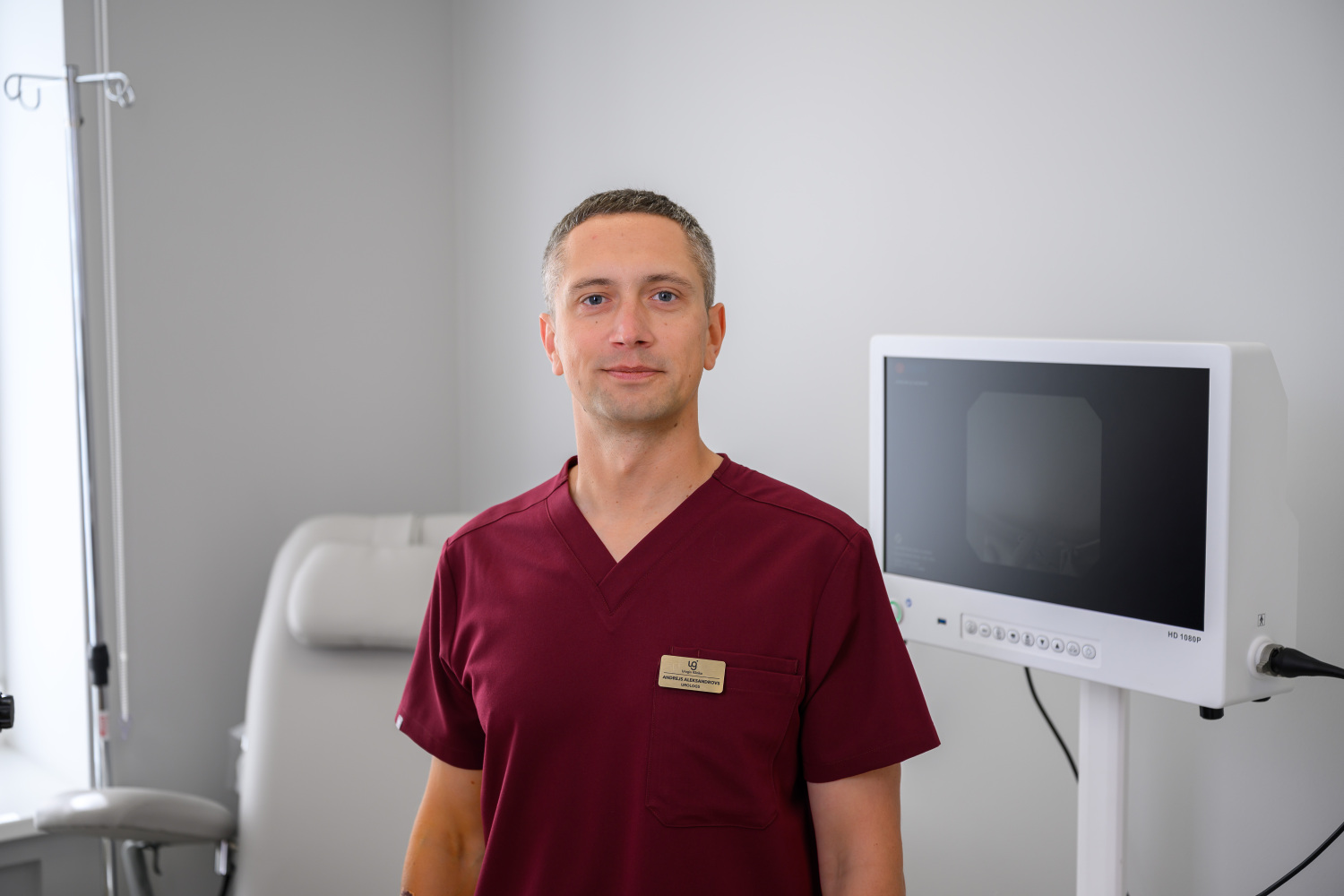
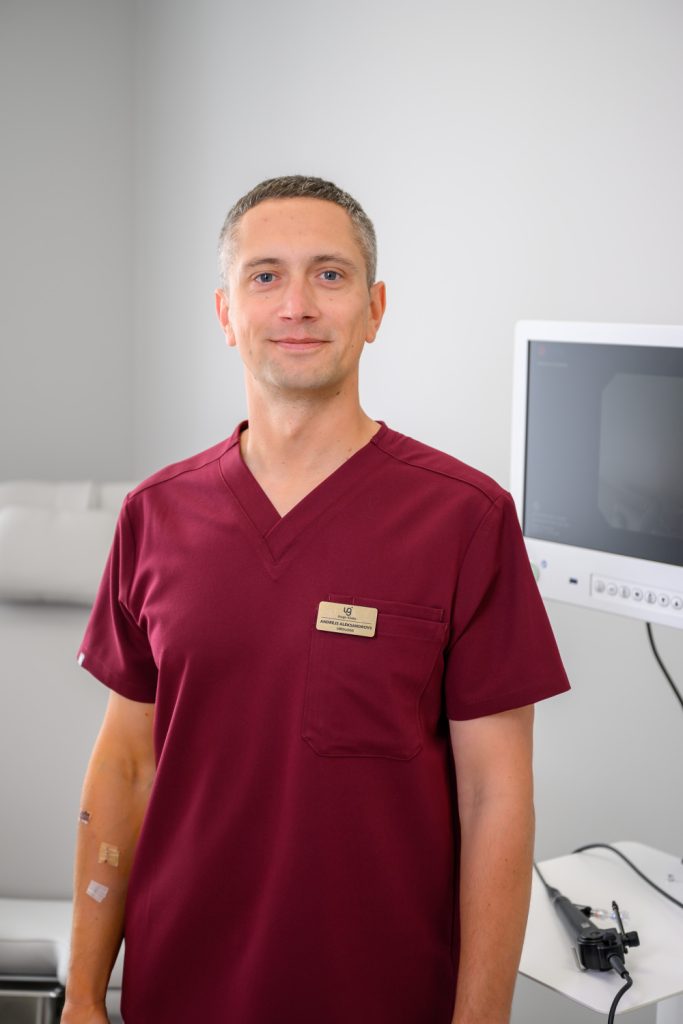
Urological procedures are performed by Dr. Andrejs Aleksandrovs
Dr. Andrejs Aleksandrovs performs outpatient urological diagnostic and therapeutic procedures according to the patient’s health condition, the doctor’s assessment, and medical indications.
Before the procedure, the doctor assesses the patient’s complaints, the results of previous examinations, and the scope of the necessary procedure, and provides information on preparation and further care.
Main areas of activity:
- urological diagnostic procedures;
- outpatient urological therapeutic procedures;
- post-operative care and monitoring;
- determination of further treatment strategy.
Frequently Asked Questions
Is a urologist's consultation necessary before a urological procedure?
You can book a flexible cystoscopy without a prior urologist consultation. Before the examination, the doctor assesses whether it can be performed.
Is it possible to perform the procedure during the first visit?
Some procedures can be performed during the first visit. Other procedures require prior preparation. For example, before a prostate biopsy or certain other procedures, a urine analysis or urine culture may be necessary, as well as prophylactic antibiotic use according to indications. Patients taking blood-thinning medications need an individual assessment of their use before certain procedures. Medications must not be discontinued independently. Therefore, in some cases, the procedure is scheduled for a separate visit after the necessary preparation.
Should blood-thinning medications be discontinued before the procedure?
Blood-thinning medications must not be discontinued independently. The doctor decides individually on the need to change or temporarily discontinue their use, assessing the bleeding risk of the planned procedure, the risk of thrombosis, as well as the potential benefits and risks for the specific patient. If necessary, an additional consultation with a cardiologist or another specialist may be required before the procedure.
Is the procedure painful and what anesthesia is used?
The sensations and degree of discomfort depend on the type of procedure. During fibrourethrocystoscopy, a local anesthetic is administered into the urethra, but discomfort may still be experienced during the procedure. Prostate biopsy can be painful, so before the procedure, the doctor explains its course and the most appropriate method of pain relief.
What to expect after the procedure and when to contact the doctor?
After some procedures, temporary mild discomfort, burning during urination, slight blood in the urine, and after prostate biopsy — also blood in the semen, may occur. If fever, severe or increasing pain, significant bleeding, urinary retention, or other pronounced symptoms occur, contact a doctor or seek emergency medical help.